Sunday, January 25, 2026

Woos, A Whoa, and Ha-Has: Insights on the Bruins and Donuts (and a Quiz)

Woo! Woo! Woo!

And so on…ten Bruins goals against the New York Rangers on Saturday January 10, 2026.

Not sure if there were more woos! Or CarShield commercials featuring Ric Flair.

How many of the ten goals did David Pastrnak and Morgan Geekie score? (see answer below)

It’s the first time two Bruins scored hat tricks in a home game (Pavel Zacha and Marat Khusnutdinov) since 1964 when Andy Hebenton and Dean Prentice tripled down on the goal production. Woo!

You may be wondering: Why the long lapse in posts on this wicked entertaining and hockey (and donut) blog?

Hockey (and Donut) Color Commentary
A few dozen of you have a renewed or perhaps brand-new appetite for this kind of writing. So I've semi-un-retired. Woo! 


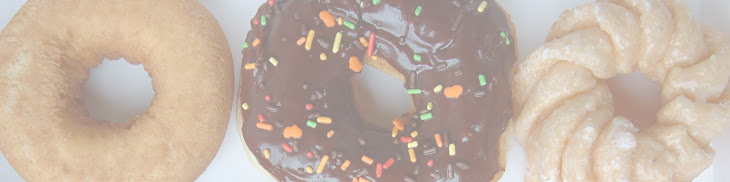
So let’s get to the donuts.

How many donuts from Atkins Farms did I finish? (see answers below)

When I wasn’t watching hockey or eating donuts, I was doing research on Milan Lucic.

Any guess where he’s playing these days? (see answers below)

Luc’s stats:

12 Games Played

4 Goals

4 Assists

-3 Rating

Not bad. But whoa, the Fifes have won seven of thirty-four games while Luc’s former Boston Bruins are on a roll.

Aside from woos and whoa, some hand-clapping and ha-ha moments for the Bruins:

Zdeno Chara’s #33 number joining the other dozen Bruins.

Can you name them all? (see answers below)

As an MC, Andrew Ference was funny, humble, and insightful.

Not as hilarious as Unobstructive Views with Andrew Raycroft, Tuukka Rask, and Patrice Bergeron or or Bergy’s imitation of Pasta of Brad Marchand.

Until next time (woo knows when that'll be), the answers to the quiz:

🏒Pasta and Geekie combined for zero goals but assisted on a few

🍩I didn’t finish any donuts but assisted on a few

🏒Milan Lucic has been playing for the Fife Flyers of the UK Elite Ice Hockey League.

🏒Bruins whose numbers have been retired

#2 - Eddie Shore

#3 - Lionel Hitchman

#4 - Bobby Orr

#5 - Dit Clapper

#7 - Phil Esposito

#8 - Cam Neely

#9 - Johnny Bucyk

#15 - Milt Schmidt

#16 - Rick Middleton

#22 - Willie O'Ree

#24 - Terry O'Reilly

#33 - Zdeno Chara

#77 - Ray Bourque 


Monday, March 11, 2024

Hockey Memories and Books

Mark Messier’s autobiography, No One Wins Alone: Read it?

I finished it in about a week, and I loved it partly because it brought back a lot of memories of my own career. Ten years in the good ol’ AMHL. (For the uninitiated, I mean the 6:30 a.m. hockey league, not the Alberta Midget Hockey League.)


Image courtesy of JC Dwyer

I think of all my teammates over the years. So much camaraderie and so many good memories at Concord Valley Sports and on the golf course. Like the time we teed up leftover powdered sugar Munchkins.

But others I’ve forgotten, like the time I imitated an ice windmill this one (August 2008). I can’t recall imitating a windmill. It sounds like me, though.

I’ve chatted with a few teammates on LinkedIn or gotten updates on others from my wife, Joy, the former AMHL photographer.

So many others I’ve lost contact because I stopped playing in 2008 and stopped going to the rink. And we moved to Greenfield, MA last year. But mostly, I’ve just been complacent, taking some things for granted.

Sorry about that.

I’m not playing anymore, but I still watch the Bruins (keep the faith Black-and-Gold fans). I’ve read a lot of hockey books. And I’m back to editing my hockey memoir and dabbling with a hockey novel on Friday mornings.

How have you been? Read any good hockey books?

Sunday, June 28, 2020

White Ice: The Racism – Violence Connection

The NHL. Violent. Racist. Yet evolving—quickly enough?

Whiteness, the ice a collective reflection of the players, coaches and executive leadership, pervades the NHL.

Here in North America, and in other colonized countries, racism and violence go white hand in white hand. From slavery to the 1960s to today, too many white people like me have been silent, and thus compliant with the status quo of brutality against our black sisters and brothers. 

My skin is white. I’m biased. I’m prejudiced. I’ve discriminated. I’m privileged. I can change.

I’ve spoken out about the incongruity and hypocrisy of fighting in hockey. I hadn’t given any thought to the connection between on-ice violence and racism. Not until I started following the NHL’s Kim Davis, absorbed Megan Ming’s Ted Talk about the root of racial violence and started reading White Fragility.

As many in the hockey community seek answers and take action to address racism, I wonder how ready we are to accelerate the exit of violence in our game.

I’m no angel. I have used my body and stick as a weapon. I loved watching hockey fights as a kid. Even today, I sometimes see a Boston Bruin incur a cheap shot and think, get that guy and teach him a lesson.

Picture this: Rabid fans, pounding on the plexiglass as players launch their fists at each other. The definition of violence playing out in front of a crowd. Rage. Blood lust. Our children learn from us and repeat the cycle.

Just like systemic racism, white supremacy and microaggressions.

This is not about why players fight (mostly to protect teammates and sometimes just to “get the boys and the crowd going.”) This is not a rehash of “Should fighting be banned from hockey?” (It already is).

This is about a deep self-examination, a societal shift and our legacies.

How long are we going to recite “it’s part of the game” and, in the same breath, denounce black and other people of color for venting centuries of frustration with a deck that is stacked against them? For reacting to violence that white people taught and continue to teach them?

Will we continue to be part of the problem or consider other solutions?

Can we at least discuss a better way to eliminate racism and violence, on and off the white ice?

I don’t have all the answers. I’ll keep searching for them and ask that you do the same.

To promote healing, let’s keep the conversation constructive, ok? We don’t have to agree. We must listen to each other.


Tuesday, May 08, 2018

Hockey and Hernias, Part V: Pelvic Floors and Physiqz

(continued from Part IV)

In 2010, I shared my experience with the so-called sports hernia. I had no idea then that so many people would find that story or the subsequent posts on the same topic.

Long after I thought I was done writing about this subject and figured my posts were buried on the Internet, Jon Chambers found my story. Jon is the content editor at Physiquz.com, a site dedicated to physical therapy and powerlifting. He has written many pieces about sports hernias, including the guest post that follows.

 Image provided by Physiqz
by Jon Chambers

The complex sports hernia injury is largely misunderstood. In fact, the name ‘sports hernia’ is a misnomer as there is no true herniation present. On the contrary, it is actually a structural weakness that develops in the deep abdominal wall and exterior obliques. This damaged soft tissue lays the groundwork for the injury’s worst symptom: chronic groin pain that doesn’t seem to respond to traditional physical therapy methods.

Effective treatment methods are largely unknown to general practitioners, leading to difficulties in receiving an accurate, positive diagnosis. For this reason, the professional advice of an expert should become a top priority for those injured. With that said, medical understanding of the problem has expanded dramatically since first mentions made their way into research journals in the 1980s. Using these studies as a roadmap, an effective roadmap to recovery has been born.

Increasingly, evidence points to muscular imbalances as the primary culprit in developing the injury. As the adductor muscles of the inner thigh become stronger, the core is unable to compensate—resulting in tears as the abdomen is forced far beyond its limits. “One-sided” athletic activities that are repetitive in nature, such as the kick of a soccer ball or the hitting of a hockey puck, are a main contributor to this uneven development.

The solution to resolving pain lies in working to restore balance. By utilizing a full-core rehabilitation approach, those afflicted are able to restore symmetry to the muscles of the hip and groin. As the athlete regains proper movement patterns, pressure is then lifted from the area allowing for relief.

Conservative treatment should be prescribed for 6 weeks. If substantial progress is not made in that time towards lowering pain levels, however, moving forward with surgery should not be feared. At surgical success rates of 95% and higher, taking the time to find a doctor specifically trained in the treatment of sports hernias is well worth the effort.

(Jim Dwyer here again, with an update on my situation and comments on Jon's post. I'd say that I'm in the 5% category. Hard to say what may have gone wrong with the surgery or subsequent physical therapy because there are so many suspectsbones, ligaments, nerves, fascia and tendonsthat reside in the pelvic floor.

Before even finding a surgeon, I recommend finding a pelvic floor therapist, someone who has performed a manual exam on hockey or soccer players.

If you're like me and learning about pelvic floor therapy after surgery, you too can benefit. After four or five visits with the pros at The Pelvic Health and Rehabilitation Center (Lexington, MA), the pain has decreased in frequency and duration. There is no magic fix for it, but there is relief. Even with the mysterious and maddening flare-ups, I'm hopeful that I can enjoy life more.

I don't expect to ever play organized hockey again and powerlifting is not my thing. Maybe a pick-up game or power walking. If I can do those activities with less pain, I'll consider that a victory. 

Thanks to all of you have visited the site and to the people like Jon who are doing their best to help those who seek help with pelvic floor pain.)
